
The Economics of Exhaustion
How a Clock Built for Factories Became a Line on the National Accounts
Modern sleep loss is less about quantity than alignment. The mismatch between the body's clock and the imposed schedule, called social jetlag, carries measurable costs in health, mortality, and national output.
The alarm goes off in the dark, at a number the body never agreed to, and the day begins with a small act of defiance against biology. Millions of people repeat this every morning, waking to a time chosen by an employer, a timetable, or a commute, and never by the sleeper. We call what follows tiredness and treat it as a personal shortcoming, a thing to be corrected with discipline and darker curtains.
For most of human history the working day answered to daylight and season. Then light became something a person could switch on. Edison’s bulb unhooked activity from the sun, and the factory added its own refinement, a single whistle that started everyone’s day at the same instant regardless of who they were. The clock on the wall stopped describing the body and started instructing it.
The tempting story here is one of decline, a lost age when people slept long and well under early stars. The record does not really support it. Before electric light people slept in fragments, woke in the middle of the night, dozed through sermons, and did not obviously log more hours than we do. What changed was not the quantity so much as the alignment. The modern arrangement asks a wide variety of bodies to keep a single, narrow schedule, and the bodies do not comply equally.
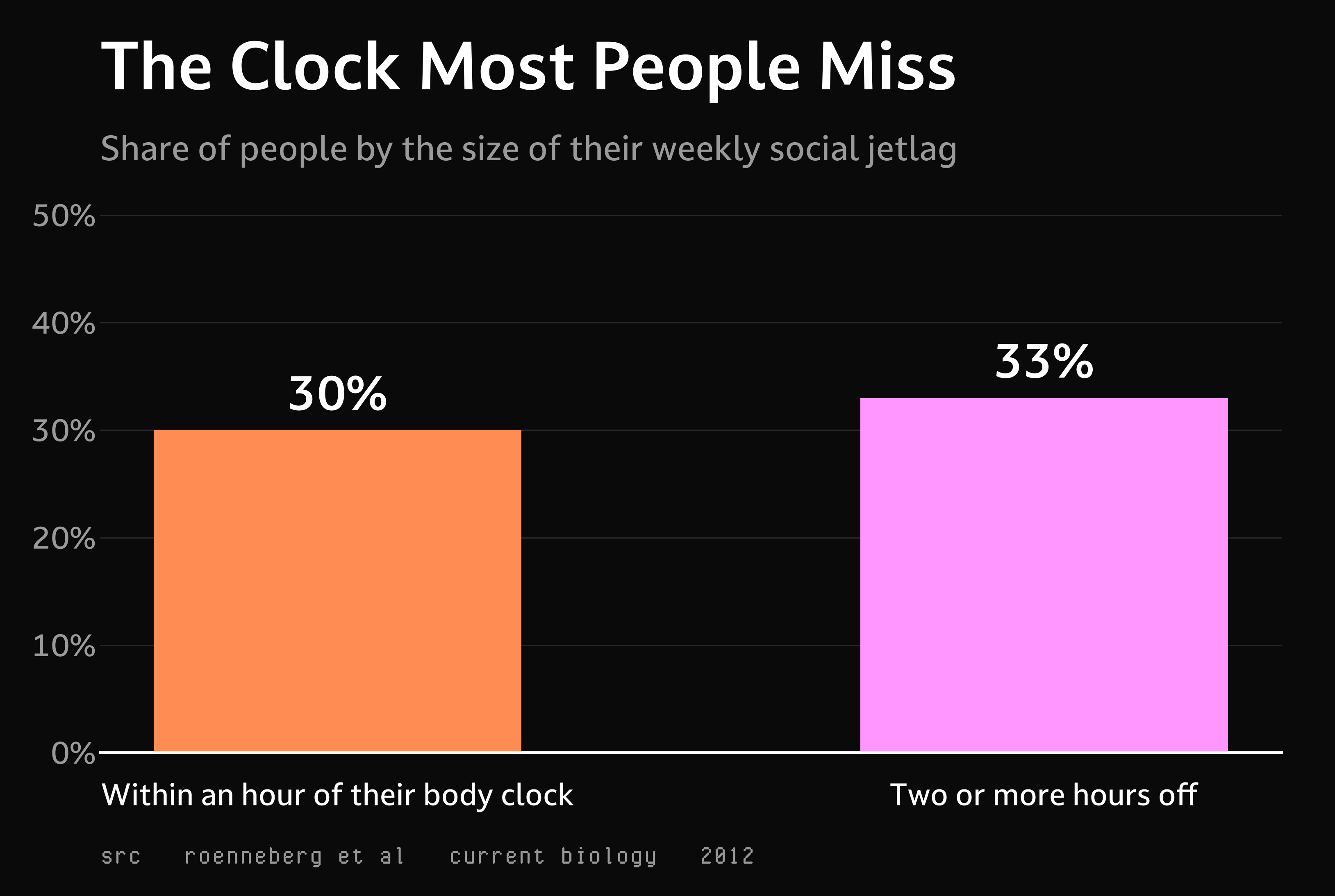
They keep different time to begin with. Some people are built to fall asleep late and wake late, others the reverse, and the spread is broad and largely genetic. A chronobiologist named Till Roenneberg gave the mismatch between that inner timing and the imposed one a name, social jetlag, the sensation of living in a time zone somebody else selected. Working from tens of thousands of questionnaires, he found that most people carry at least an hour of it through the working week, and about a third carry two hours or more, the equivalent of flying across the Atlantic every Monday without leaving town. Each hour of the gap tracks with roughly a third higher odds of being overweight, whether or not the person is short on sleep.
Sleep is also the one interval a market has never fully worked out how to sell. You cannot shop, produce, or scroll while unconscious, which makes the eight-hour gap the last stubborn holdout against a 24/7 economy, and the economy has been chipping at the edges of it for a century. The late shift, the two a.m. delivery window, the glowing screens that quietly nudge the internal clock later each night. The encroachment is gradual and rarely announced, and it is easy to mistake for progress.
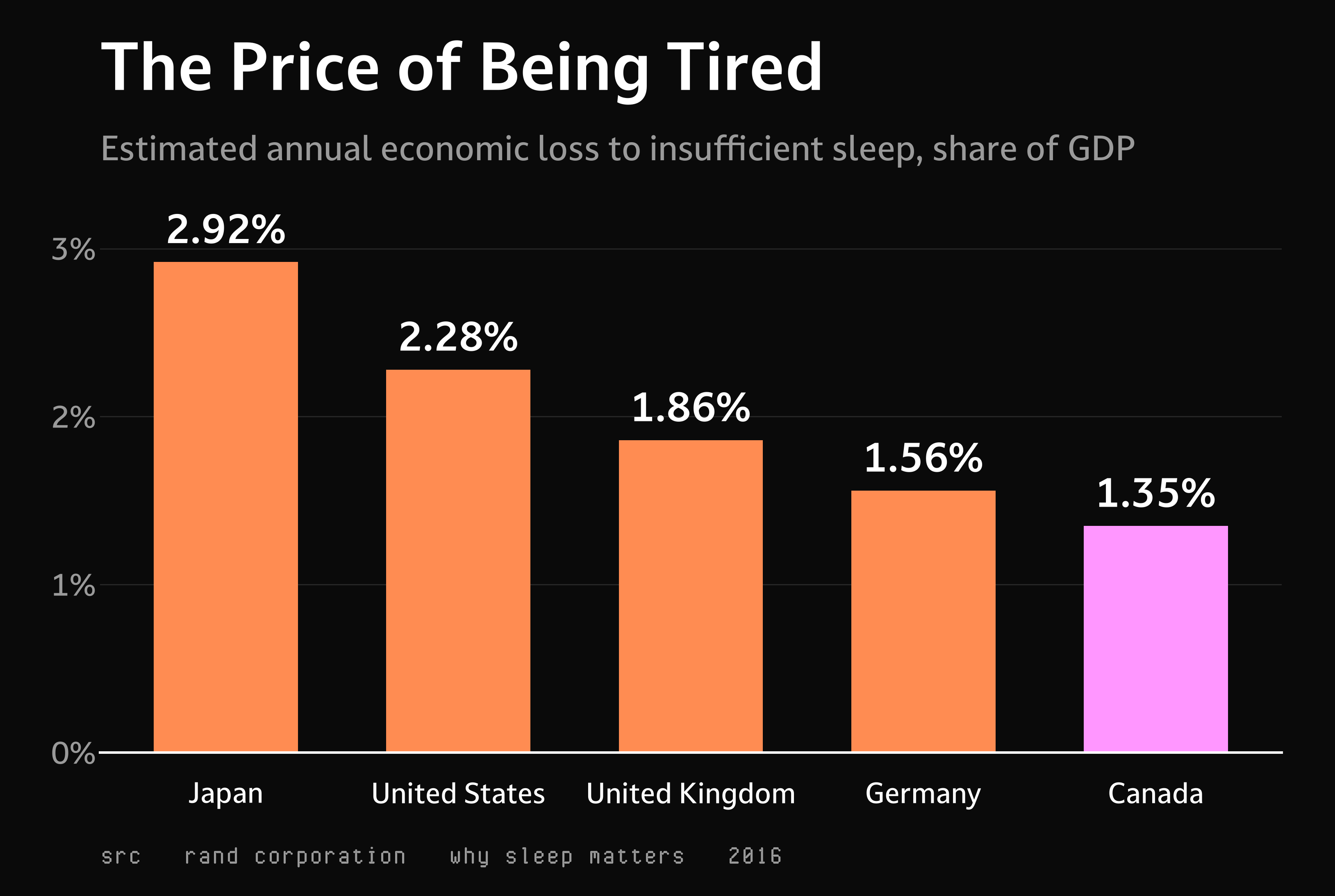
None of this stays private. It reads like a personal complaint, the kind of thing a person mentions and then apologises for mentioning, but it bills like a public one. The RAND Corporation put a figure on the tab. Insufficient sleep costs the United States somewhere around 411 billion dollars a year, a little over two percent of everything the country produces. Japan loses close to three percent, the largest share of any nation studied, and Britain, Germany, and Canada each surrender a slice not far behind.
Data
| Country | Annual loss, share of GDP |
|---|---|
| Japan | 2.92% |
| United States | 2.28% |
| United Kingdom | 1.86% |
| Germany | 1.56% |
| Canada | 1.35% |
The body keeps its own ledger alongside the accountant’s. One in three American adults sleeps under seven hours, and short sleep tracks with a rise of a little over a tenth in the risk of dying early. The schedule that produces this has, quietly, been classified. The World Health Organization’s cancer agency lists night shift work, the sort that drags the internal clock into open conflict with the sun, as a probable carcinogen, filed in the same drawer as substances we normally think to regulate. The working hours themselves, entered on a list of suspected hazards.
There is a grim symmetry in who pays most. The countries that treat rest as a character flaw tend to sleep the least and lose the most for it. The OECD’s own figures put Japan last among wealthy nations, a bit over seven hours a night, with South Korea close behind. The economies most convinced that being tired is a mark of seriousness are the same ones bleeding the largest share of their output to exhaustion.
Nobody pays this earlier than the young. A teenager’s clock runs genuinely late, pushed back by biology for a few years, which is why a sixteen-year-old stares at the ceiling at eleven and cannot assemble a sentence at seven. School begins at seven anyway. It is close to the only arrangement we have where the misalignment is not an accident but the blueprint.
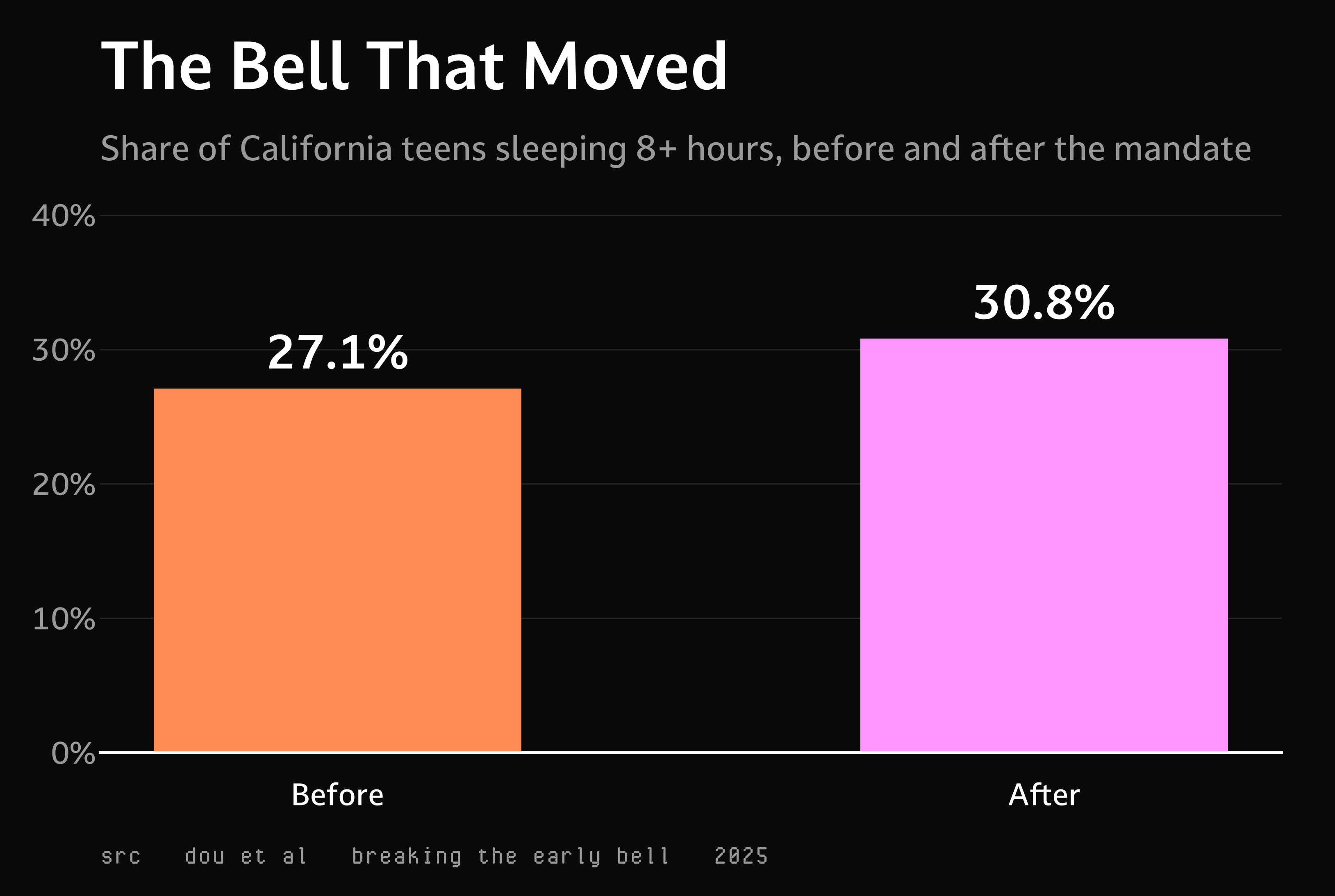
California decided to find out what happens when the bell moves. In 2022 it became the first state to forbid its high schools from starting before half past eight. The results arrived fast. More teenagers slept a full eight hours, and their test scores edged upward, the two things schools claim to want most, delivered by the simple act of agreeing with adolescent physiology rather than overruling it.
What that experiment shows is not that later is better in some soft wellness sense. It is that the exhaustion was never quite ours to own. We inherited a clock built for coordination, for the whistle and the timetable and the shared nine a.m., and we have spent a century mistaking our failure to meet it for a failure of nerve. The curtains get darker. The advice gets louder. The alarm still goes off in the dark, at a number nobody’s body chose, and most of us reach over and apologise to it.
Request an AI summary
Learn more about the ideas and references behind this note.
FAQ
- What is social jetlag?
- Social jetlag is the chronic gap between a person's internal body clock and the schedule that work or school imposes on them, a term coined by the chronobiologist Till Roenneberg. Drawing on tens of thousands of Munich ChronoType Questionnaire responses, his research found that roughly 70 percent of people carry at least an hour of it through the working week and about a third carry two hours or more. Each additional hour of the gap is associated with roughly a third higher odds of being overweight, independent of how long a person actually sleeps.
- How much does sleep deprivation cost the economy?
- The RAND Corporation's 2016 study 'Why Sleep Matters' estimated that insufficient sleep costs the United States up to 411 billion dollars a year, about 2.28 percent of GDP. Japan loses up to 2.92 percent of GDP, the highest share among the countries studied, with the United Kingdom at 1.86 percent, Germany at 1.56 percent, and Canada at 1.35 percent. The losses come mostly from reduced productivity and higher mortality among the chronically under-slept.
- Do later school start times actually help teenagers?
- The evidence points that way. After California became the first state to mandate that high schools start no earlier than 8:30 a.m. in 2022, an economic evaluation by Dou and colleagues (2025) found the share of adolescents sleeping at least eight hours rose by 3.7 percentage points, a relative increase of around 14 percent, alongside a roughly 2 percent gain in SAT scores. The change works because adolescent body clocks run genuinely late for biological reasons, so an early bell forces a misalignment that a later one removes.
- What are some related topics to explore?
- social jetlagcircadian misalignmenteconomic cost of sleep deprivationchronotypeshift work cancer risklater school start times
Defined Terms
- Social jetlag
- The chronic gap between the body's internal sleep timing and the schedule imposed by work or school, named by the chronobiologist Till Roenneberg.
- Chronotype
- A person's natural preference for when to sleep and wake, ranging from early-rising larks to late owls, and largely set by genetics.
Foundations
- 24/7: Late Capitalism and the Ends of Sleep
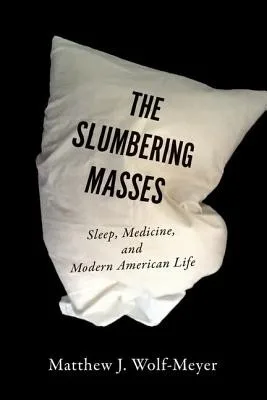
- Jonathan Crary, 2013
- Social Jetlag and Obesity
- Roenneberg, Allebrandt, Merrow, Vetter, 2012
Related Reading
Related Notes
- The Architecture of Modern Loneliness
- A 2023 US Surgeon General advisory put chronic loneliness alongside smoking fifteen cigarettes a day. The architecture that used to hold strangers together did not collapse. It was redesigned out of the floor plan.
- The Architecture of Alienation
- The flight into solo work is sold as freedom. Read through Marx, Wilde, Luxemburg, and the wages-for-housework feminists, it looks more like an old machine rebuilt inside the home, where the worker now pays to work, teaches the machine to replace them, and calls it independence.
- The Burger That Benchmarks Everything
- A monthly design subscription costs the same in San Francisco as in Sarajevo, but the dollar does not. A famous sandwich index was built to measure that gap, and regional software pricing quietly tried to answer it, until users acted on the logic and the companies pulled it back.