
The Architecture of Alienation
Mapping Nineteenth-Century Political Economy onto the Platform Age
Platform capitalism does not abolish labour. It redistributes it onto the individual, rebrands it as autonomy or passion, and keeps the proceeds. Classical political economy named the mechanism a century ago.
It is eleven at night, and the laptop is open on the kitchen table again. The day job ended hours ago. What is running now is the second job, the one with no building and no boss, although it has an algorithm that decides whether anyone sees the work and a set of monthly invoices that behave a great deal like a boss. Nobody calls this a job. The word people use is side hustle, and the word is doing a lot of quiet work.
The flight to that table is easy to explain. The years since the pandemic have handed workers a run of good reasons to want out. Artificial intelligence arriving in the office with an appetite, return-to-desk mandates issued by companies that spent the lockdown discovering they could function without the desk, a venture-capital market that inflated and then, when cheap money ended, stopped subsidising the growth it once paid for and began demanding that its platforms extract instead. Taking control of your own labour feels like the only exit. The trouble is where the exit leads.
The promise attached to the side hustle is old and genuinely beautiful. Oscar Wilde, writing in 1891, imagined a world in which people freed from the fear of poverty could stop accumulating things and start realising their talents, making art and inventions for the pure disintegrating joy of it, unbound from the tyranny of habit and the need to monetise their survival. This is close to what the modern creator is sold. Build a thing of your own, be your own boss, do work that is yours. The pitch borrows Wilde’s individualism almost word for word. What it leaves out is that Wilde placed his individualism on the far side of the abolition of want, not inside a marketplace, and that the marketplace has a structure of its own.
The structure is a landlord. The platform owns the ground where the customers are, rents the worker access to it, and takes a share of everything that passes through. Etsy keeps roughly six and a half percent of a sale plus a listing fee plus payment processing. Substack takes ten percent of a paid subscription. Amazon’s marketplace fees cluster around fifteen percent before storage and fulfilment. The Apple App Store takes thirty. Ride-hail platforms commonly retain something near forty percent of a fare, more when the pricing is opaque. Sociologists who study this have a name for it, digital sharecropping, after the arrangement that replaced slavery in the American South, where freed people worked land they did not own, paid the owner a share of the crop, and bought their tools from the company store at prices set so that what remained was rarely enough to escape.
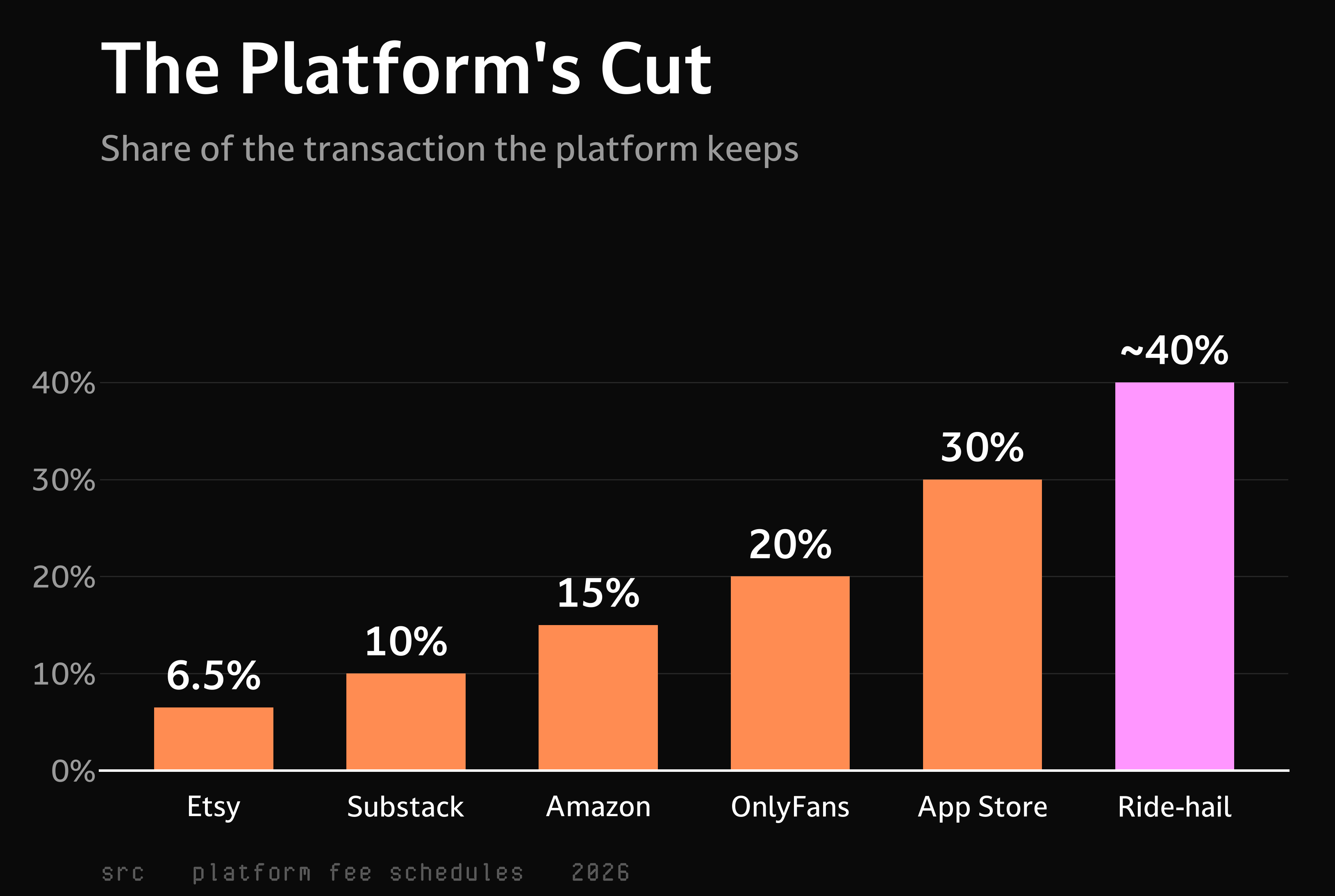
Data
| Platform | Platform's cut |
|---|---|
| Etsy | 6.5% |
| Substack | 10% |
| Amazon | 15% |
| OnlyFans | 20% |
| App Store | 30% |
| Ride-hail | ~40% |
The take rate is only the visible cut. Underneath it sits the subscription stack, the monthly cost of being independent. A design tool, an email service, an analytics dashboard, a scheduling app, a domain, a host, an artificial-intelligence assistant or two. The total lands somewhere between one and three hundred dollars a month before a single dollar is earned. These are the tools an employer used to buy, because the work was the employer’s and the employer wanted it done. The independent worker now buys them, along with the training, the risk, and the public profile the work requires. The employer provided the infrastructure and paid for the labour. The platform provides the customers and pays for nothing. The worker, in a plain economic sense, is now the funder of their own employment.
Rosa Luxemburg described the trap in 1900, watching an earlier generation hope that worker cooperatives could grow a gentler capitalism from inside the existing one. A cooperative in a competitive market, she observed, is forced to submit to the market’s laws to survive, which obliges its workers to govern themselves with what she called the utmost absolutism, to become, toward their own labour, the capitalist entrepreneur they had meant to escape. The solo worker at the kitchen table has completed the move. There is no boss to resent because the worker has internalised the boss, setting their own impossible hours, intensifying their own labour, disciplining themselves on the algorithm’s behalf. The self-exploitation feels like freedom because there is no one else in the room doing the exploiting.
Then the machine arrives, and the arrangement deepens. The current productivity story is that everyone should be using artificial intelligence, and the workforce has obliged. By 2024 roughly three-quarters of knowledge workers were using generative tools at work, and nearly four in five were bringing their own, paid for out of pocket, into jobs that had not asked them to. What that means in practice is that workers are spending unpaid evenings teaching the software to do their jobs, writing down the tacit knowledge accumulated over years into instructions a model can follow, and doing it eagerly, because the alternative is to be the last person still doing the task by hand. The labour of the day has quietly split into two, the work itself and the separate, unpaid work of describing the work well enough that a machine can inherit it.
Marx supplied the vocabulary for this in a notebook written in the late 1850s, in a passage on machinery that has aged into prophecy. He described the general intellect, the accumulated knowledge and skill of a society, becoming a direct force of production once it is absorbed into machines. A generative model is that idea made literal. The collected writing, art, and code of humanity, scraped from the commons and frozen into a private engine. Marx called the machinery of capital dead labour, and said it lived, vampire-like, by draining the living labour of the worker. The model is dead labour built from billions of human hours, now rented back to the workers who made it possible and pointed at their jobs. The Turkish mathematician Cahit Arf drew the same line from the other side. Lecturing in Erzurum in 1959, in the years Turing was asking whether machines could think, Arf granted that a machine might compute, reason by analogy, and even adapt to the unfamiliar, but insisted that the aesthetic, freely choosing part of the mind was the one thing it could not carry across. That part is the living labour, and it is exactly what the model cannot hold and the worker cannot stop being asked to supply. Behind it stands what Marx called the reserve army, the pool of the precarious and the on-call whose availability keeps everyone else compliant, and which the platform economy maintains as a permanent feature, an infinite supply of pieceworkers who can be summoned and deactivated by an interface.
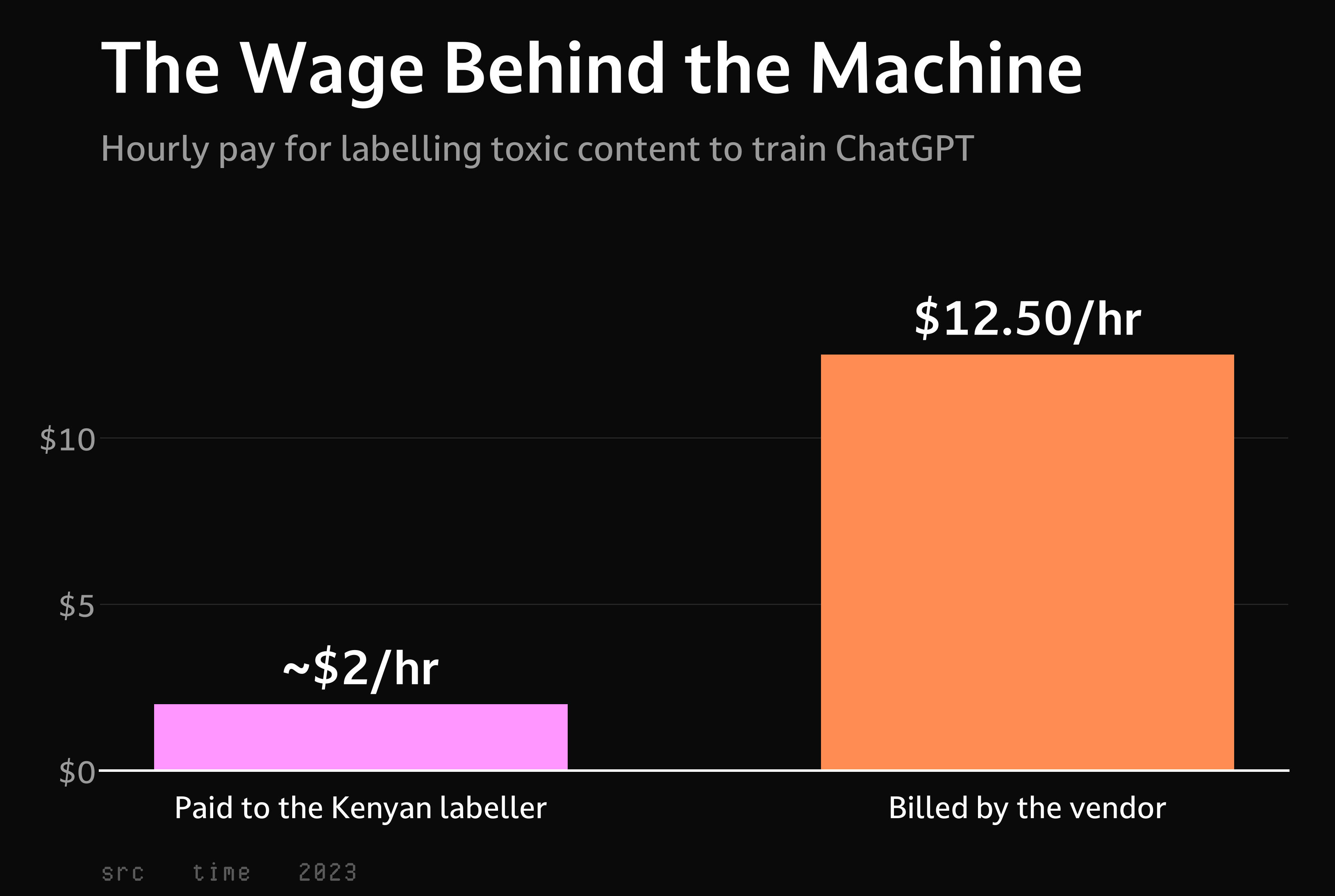
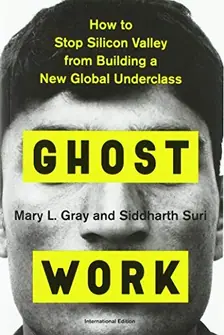
The seamlessness is a performance, and it has a hidden cost. Every model that appears to think on its own was trained on the judgments of human beings, and a good deal of that training is done cheaply and out of sight. In 2023 it emerged that the labelling of toxic material for one of the largest chatbots had been carried out by workers in Kenya, hired through an outsourcing firm, and paid somewhere between about a dollar and two dollars an hour to read the worst of the internet so the product would come out clean. The firm billed the client roughly twelve and a half dollars an hour for the same labour. The anthropologists Mary Gray and Siddharth Suri gave the arrangement a name, ghost work, the hidden human effort that props up the illusion of automation. Capital did not transcend labour with the algorithm. It moved the labour somewhere the customer would not look.
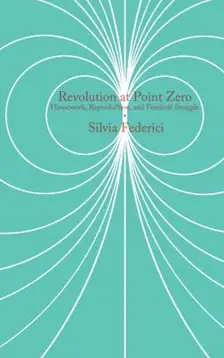
If all of this sounds like a new invention, the oldest part of the trick is the quietest, and it was diagnosed by a group of feminists in the 1970s who were looking at a different kitchen table. Mariarosa Dalla Costa, Selma James, and Silvia Federici argued that capitalism had always rested on a vast foundation of unwaged work, the cooking and cleaning and caring that produces and maintains the workforce itself, done overwhelmingly by women and rendered invisible by being called love rather than labour. Federici put it with a bluntness that has outlived its decade. They say it is love, she wrote, we say it is unwaged work. The mystification was the point. Once a task is folded into affection or duty or nature, it can be extracted forever without a wage, and no one need account for what it costs.
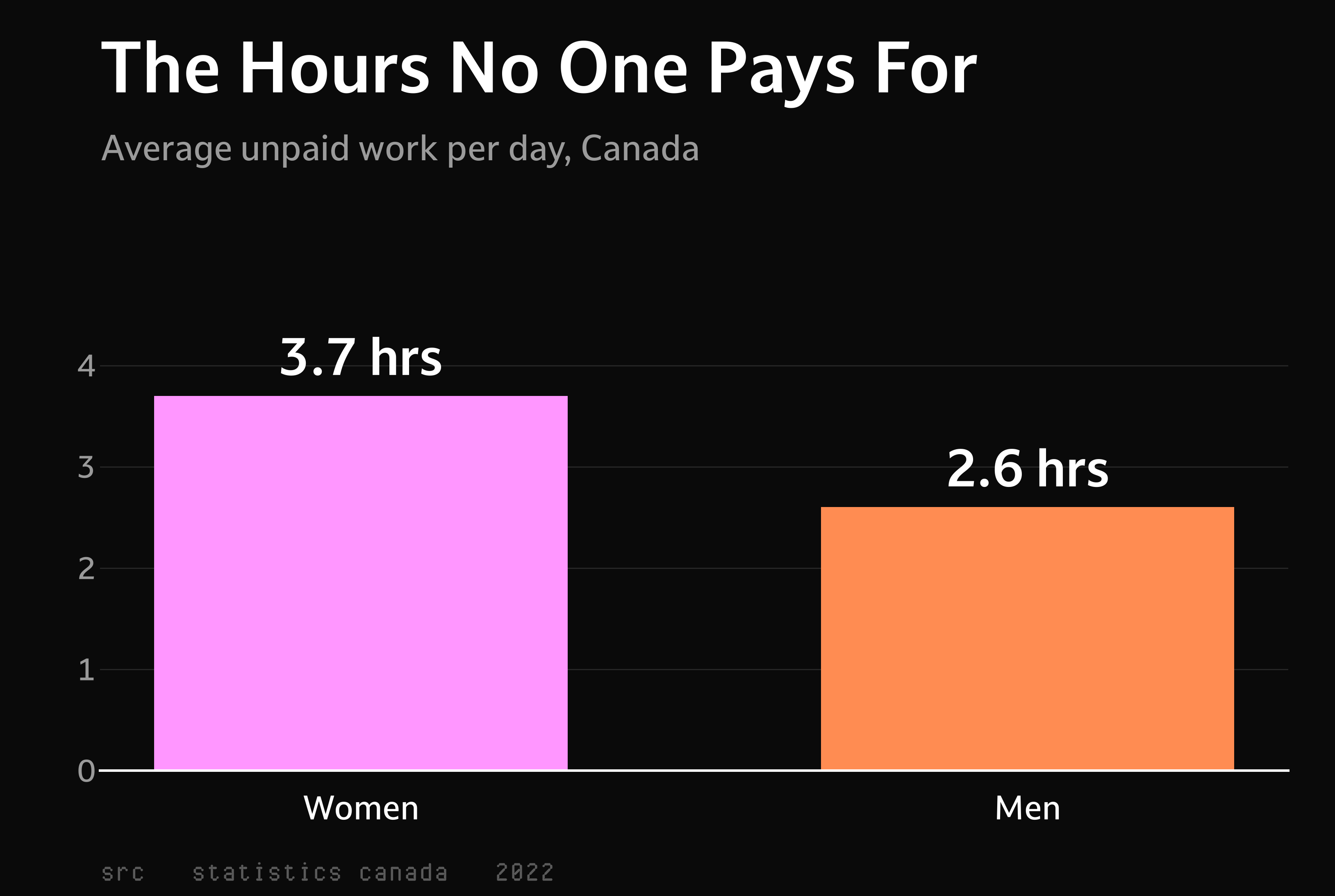
The gap has narrowed but not closed. Statistics Canada’s most recent time-use figures put women at roughly three and three-quarter hours of unpaid work a day against men’s two and a half, and estimates of the total value of unpaid labour run to something like fifteen percent of national output, and higher under other methods, an entire hidden economy that appears in no wage and no ledger. What the tech economy has done is generalise the move. The unpaid labour of building an audience, moderating a community, and training a model is not called work. It is called passion, or exposure, or community. The same coat of romanticism that turned housework into love now turns the creator’s boundless off-hours into a calling, and a calling, conveniently, has no closing time and no rate.
This is where Wilde has to be handled with care, because his most quoted line is routinely turned against the wrong target. He warned that if socialism became authoritarian, if governments came to hold economic power as well as political power, the result would be Industrial Tyrannies and the last state of man would be worse than the first. He was describing the state, not the corporation. But the warning was about concentrated, absolute economic control, and it is not a large step to see the walled gardens of the platform economy, which set the terms of participation for millions and answer to no vote, as a private version of the thing he feared. Wilde’s individualism was never going to be reachable inside them. They are built to capture exactly the surplus he wanted people freed to enjoy.
None of which is a call to close the laptop, which would change nothing, or to refuse the tools, which are not the problem. The work at the kitchen table is real, and often more interesting than the day job, and the small clean spark of making a thing is not a delusion. What is worth resisting is the story wrapped around it. That the arrangement is empowerment, that the worker is an entrepreneur rather than the labour an entrepreneur has rented, that the unpaid hours are a passion rather than a transfer. The first move, before anything can be refused or shared or revalued, is to name the work accurately, to keep the kind of internal accounting that knows what is being taken and by whom. The three short books this essay compresses, on the platform, on the machine, and on the unpaid hours, work the argument out at greater length, and will be available soon on this site.
The laptop is still open. The hour is later than it was. The side hustle is paused, the tools are running, and the subscription will renew on the first of the month, moving a small amount of money, in an increment too small to notice, toward a platform whose name the worker has stopped really seeing, in exchange for the right to keep doing the work they have already been doing. That is the architecture. It was drawn a long time ago, and it has only been furnished with software.
Request an AI summary
Learn more about the ideas and references behind this note.
FAQ
- How do platforms extract value from independent creators?
- Through take rates, subscriptions, and control of access. Etsy keeps roughly 6.5 percent plus fees, Substack 10 percent, the Apple App Store 30 percent, and ride-hail platforms commonly take around 40 percent of a fare. On top of the cut, the independent worker now pays for the tools an employer once provided, a monthly software stack that can run to a few hundred dollars before anything is earned. The platform supplies the customers and takes its share while the worker supplies the labour, the equipment, and the risk.
- Did Oscar Wilde call capitalism an Industrial Tyranny?
- No, and this is a common misattribution. In The Soul of Man Under Socialism (1891), Wilde used Industrial Tyranny to warn about authoritarian, state-run socialism. a government holding economic power as well as political power. He was arguing for individualism freed from drudgery, not describing private corporations. The phrase can be borrowed as an analogy for concentrated, monolithic economic control, including that exerted by platform monopolies, but Wilde aimed it at the state.
- What are some related topics to explore?
- platform capitalism labour extractiondigital sharecropping side hustlemarx general intellect ai dead labourwages for housework federiciself-exploitation solo entrepreneurghost work ai hidden labour
Defined Terms
- General intellect
- Marx's term for the accumulated social knowledge of humanity once it becomes a direct force of production, embodied in machinery.
- Prosumer
- Alvin Toffler's term for a person who produces the goods or services they consume, collapsing the line between customer and unpaid worker.
Foundations
- The Soul of Man Under Socialism
- Oscar Wilde, 1891
- Grundrisse: Foundations of the Critique of Political Economy
- Karl Marx, 1857-58
Related Reading
Related Notes
- The Machinery of Modern Work
- Modern workplaces promise meaning and flexibility. The tools meant to enable the freedom seem to do the opposite. How remote work became the new assembly line.
- The Humans Have Left the Building
- Public forums emptied out while bots moved in. The last genuine argument, the last mind actually changed, nobody marked the moment the room went quiet.
- The Chat Room We Lost
- The internet moved from communal chat rooms to curated self-expression. Why it stopped being a place you meet strangers and became a place you perform for them.